
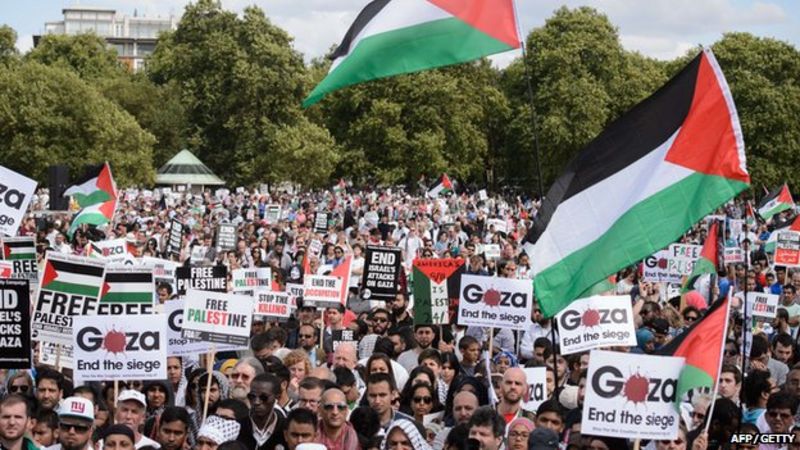

Amnesty International has formally branded Hamas’s October 7 onslaught and its ensuing campaign as both war crimes and crimes against humanity. Amnesty International accused Hamas of crimes against humanity, including extermination, during and after the October 7 2023 attack This verdict now forces Westminster to confront a stark legal crossroads. UK political analysis highlights the legal dilemma
The 173‑page dossier, released in December 2025, details indiscriminate rocket fire, the militarisation of schools and hospitals, systematic executions, child‑soldier recruitment and the use of civilian neighbourhoods as human shields. Amnesty report, 173‑page dossier Satellite‑derived launch‑site coordinates and forensic analysis of unexploded ordnance demonstrate violations of the principle of distinction and proportionality under the Geneva Conventions. UN OCHA satellite report Drone imagery and verified video recordings show fortified school compounds used as command‑and‑control centres, breaching Article 53 of Additional Protocol I. Forensic Architecture report on school compounds Medical examiner reports and survivor statements constitute evidence of murder and torture that meet the Rome Statute definition of crimes against humanity. WHO medical examiner report UNICEF field reports and school‑attendance records confirm the recruitment of children, contravening Article 8(2)(b)(xxvi) of the Rome Statute. UNICEF child recruitment report Geolocation of launch pads within residential blocks underpins the prohibition of human shielding in Article 51(7) of Additional Protocol I. IHL database on human shielding
These findings sit squarely within an established international legal framework. Customary international humanitarian law obliges all parties – state and non‑state – to respect the principles of distinction, proportionality and precaution, as codified in the 1949 Geneva Conventions and their 1977 Additional Protocols. Geneva Conventions treaty text Because Palestine acceded to the Rome Statute in 2015, alleged atrocities on its territory fall within the International Criminal Court’s jurisdiction. ICC jurisdiction over Palestinian territory United Nations Security Council resolutions 1701 and 2334 reinforce these norms, while the UN Human Rights Council’s 2023 Gaza report underscores dual accountability for both Israeli and Palestinian actors. UNSC Resolution 1701 (2006) UNSC Resolution 2334 (2016) 2023 UNHRC Report documents alleged violations by both sides
Domestically, the United Kingdom possesses a “dual‑track” toolbox to translate Amnesty’s evidence into action. The International Criminal Court Act 2001 empowers British courts to prosecute war crimes and crimes against humanity committed abroad. International Criminal Court Act 2001 The Terrorism Act 2000 criminalises the financing and facilitation of designated terrorist organisations. Terrorism Act 2000 The Sanctions and Anti‑Money Laundering Act 2018 allows the Treasury to impose targeted asset freezes and travel bans without a UN mandate. SAMLA 2018 Export‑control powers under the Export Control Order 2008 give ministers latitude to block dual‑use goods that could be diverted to tunnel‑building or weapons‑storage in Gaza. Export Control Order 2008
The ripple effect lands heavily on British NGOs operating in Gaza. Under the Overseas Operations Act 2020, charities must conduct rigorous risk assessments and report any suspected terrorist financing. Overseas Operations Act 2020 The Charity Commission’s 2023 guidance on “Terrorism and Conflict‑Zone Funding” demands independent verification that aid does not indirectly benefit Hamas‑linked entities. Charity Commission Guidance (2023) Public‑sector donors such as the FCDO now attach a mandatory “terrorism‑screening clause” to any Gaza‑related grant. FCDO terrorism‑screening clause Private foundations have followed suit, meaning that failure to prove the neutrality of aid could trigger fund repayment, de‑listing and even civil forfeiture. Amnesty’s report intensifies NGO scrutiny
In short, Amnesty International’s painstaking dossier supplies the United Kingdom with a legally robust basis to move beyond rhetoric. Whether through criminal prosecutions, targeted sanctions, tighter export controls or stricter oversight of humanitarian actors, the onus now lies on ministers to balance counter‑terrorism imperatives with the moral duty to deliver aid to Gaza’s civilian population. The choices made in the coming weeks will not only shape the UK’s compliance with international law but also determine the future viability of British civil‑society’s presence in one of the world’s most volatile theatres.
Image Source: www.bbc.com