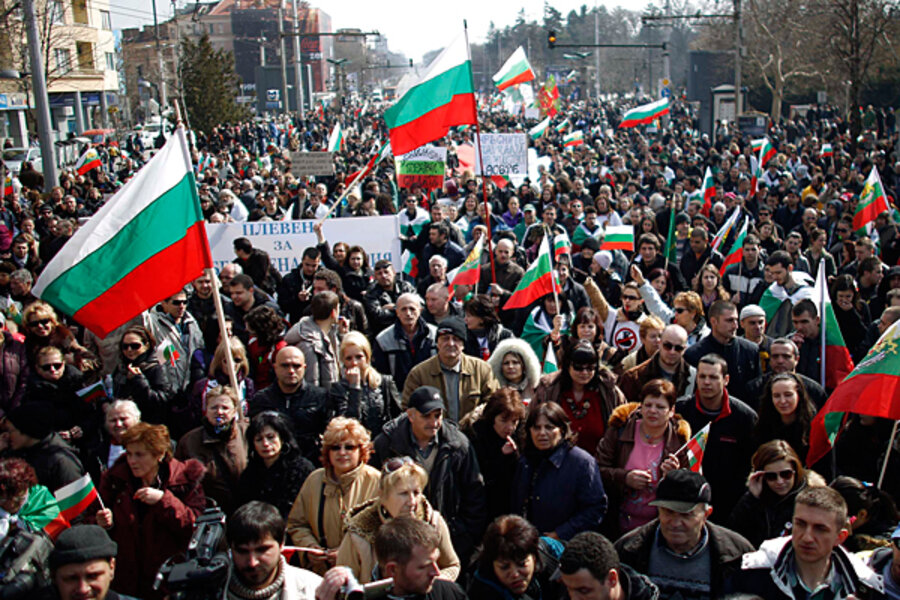

The streets of Sofia erupted on 1 December as tens of thousands of Gen‑Z Bulgarians converged on the capital, brandishing placards that read “GEN Z IS COMING” and demanding “Young Bulgaria Without the Mafia”. Within hours the protest had forced Prime Minister Rosen Zhelyazkov’s minority cabinet to retreat from its controversial 2026 budget – the first ever drafted in euros – and set in motion a chain of events that culminated in the government’s resignation on 11 December.
The flashpoint was the budget’s twin‑track shock: generous salary hikes for state officials, especially inside the Interior Ministry, the armed forces and the judiciary, paired with steep hikes in social‑security contributions, a doubled dividend tax and a sharp rise in individual pension levies. Young workers, already squeezed by a relentless cost‑of‑living crisis, interpreted the package as a cash‑hand to entrenched interests at their expense. Police put the Sofia crowd at 50‑100 000, while drone footage from media outlets suggested the figure topped 100 000 by week’s end. The government withdrew the draft the following morning, but the withdrawal only amplified the call for a complete break with the ruling coalition.
Social media turned the budget controversy into a digital mobilisation blitz. TikTok and Instagram videos spread the slogan “Young Bulgaria Without the Mafia” across university campuses and informal networks, converting a generation that has never taken to the streets into a coordinated protest force. By 11 December the demonstrations had spread to Plovdiv, Varna, Burgas, Ruse and Pleven, with clashes that saw rocks and firecrackers hurled at police, pepper‑spray deployed, ten arrests and several injuries – a stark reminder that the anger was far from symbolic.
Leaders of the movement, speaking to local outlets, framed their agenda as a dual demand: an immediate cabinet resignation and a sweeping anti‑corruption overhaul anchored by EU guarantees. Their core list includes the repeal of the contentious judicial‑reform package, the creation of an independent anti‑corruption agency insulated from political interference, transparent public‑procurement rules, higher minimum wages and pension indexation, and a binding EU rule‑of‑law monitoring mechanism that would tie future reforms to Bulgaria’s euro‑zone entry and EU funding. The protesters insist that any credible reform must be codified before the 1 January 2026 switch to the euro.
The embattled Zhelyazkov government attempted to paint the uprising as an “anti‑euro” campaign, hoping to delegitimise the street pressure ahead of the currency changeover. Yet opinion polls show roughly half of Bulgarians remain sceptical about adopting the euro, underscoring a deeper societal fissure between EU integration aspirations and a demand for accountability at home. The cabinet’s resignation, formally accepted by parliament on 12 December, opened a constitutional window for either a new coalition or an interim administration to steer the country through the coming months.
In Brussels, the European Commission has adopted a pragmatic yet firm line. A mid‑December briefing confirmed that Bulgaria will join the euro zone on 1 January 2026 regardless of the domestic turmoil, stressing that the procedural steps already taken will stand. At the same time, the Commission has launched a formal “rule‑of‑law dialogue” with Sofia, signalling that future disbursements of cohesion funds and deeper integration steps will be conditioned on demonstrable progress in judicial independence and anti‑corruption measures. Though Commissioner Margaritis Schinas was not quoted, his remit for rule‑of‑law enforcement makes him the point‑person monitoring the situation.
The Bulgarian flashpoint tests the EU’s democratic safeguards far beyond the Balkans. By decoupling the technical euro‑adoption timetable from the reform agenda, Brussels preserves market confidence but risks being seen as tolerating political impunity. If the new government can translate protest demands into concrete legislation and satisfy the EU’s rule‑of‑law dialogue, Bulgaria may emerge as a model of youthful civic pressure effecting change within the EU framework. Failure to deliver, however, could see Brussels wield harsher tools – from withholding funds to delaying further integration – and would send a stark warning to other aspiring members that the promise of euro‑zone membership does not outweigh the price of democratic backsliding. The coming weeks will reveal whether Bulgaria’s streets have reshaped the continent’s democratic trajectory or simply become a footnote in a scheduled currency switch.
Image Source: www.csmonitor.com