
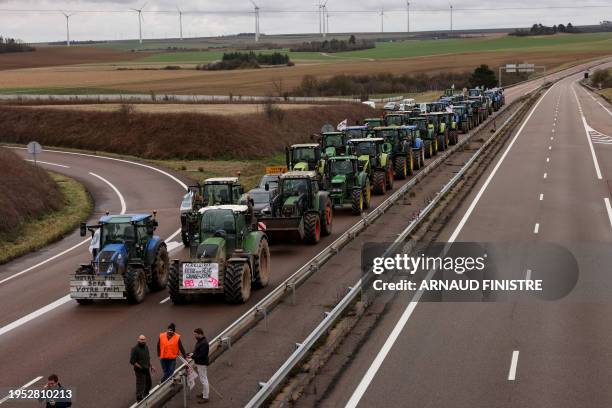

The French government has ordered the emergency slaughter of roughly 3,000 cattle after a contagious form of nodular dermatitis – Lumpy‑Skin Disease – was confirmed in the southwest, and farmers have responded by blocking roads, hurling manure and forcing police to fire tear‑gas. The crisis, now spilling over into Belgium, Germany, Italy and Spain, threatens to turn a regional health scare into a pan‑European food‑security headache.
In Ariège and the Hautes‑Pyrénées veterinarians were instructed to cull about 2,500 head in a single emergency decision, while a 208‑head herd in the Gers department became the flashpoint of a standoff that saw police intervene after breeders refused to comply. The Gers incident, in particular, saw demonstrators surrounded by police lines, tear‑gas canisters deployed and a convoy of condemned cattle left to rot on the roadside – a stark illustration of the anger simmering among France’s cattle community.
The decree rests on Article 7 of EU Animal Health Law (Regulation 2016/429) and the Commission’s Implementing Decision that classifies Lumpy‑Skin Disease as a Category A threat, obliging Member States to impose immediate eradication measures, movement bans and compulsory culling. While the law also demands full market‑value compensation and that culling be a last‑resort measure, critics argue those safeguards have been ignored, leaving farmers to shoulder losses without the promised safety net.
Farmers on the ground describe the order as disproportionate and ill‑timed. They point out that the disease’s prevalence is still under investigation and that vaccination – explicitly permitted under the same regulation – has not been rolled out uniformly. “We are being forced to kill healthy animals while the state sits on its hands,” one breeder told us, echoing a chorus of voices demanding a vaccination‑first strategy and transparent risk assessments before any further slaughter is sanctioned.
The cull has already rattled the Western European beef market. France, the EU’s second‑largest beef producer, imposed a temporary export ban on live cattle and carcasses from the affected departments, pushing Belgian and German importers to source elsewhere and driving spot prices up by 5‑8 % within a week. Retail cuts in Belgium and Germany have risen €0.30‑€0.45 per kilogram, while veal – a specialty of the Midi‑Pyrénées – commands an extra €0.50 per kilogram, a price shock that will be felt by consumers across the continent.
Processing plants in the Midi‑Pyrénées and Occitanie, which normally handle up to 30 % of France’s veal output, have halted operations for safety inspections and to cope with a surge of carcasses destined for disposal rather than market. The resulting backlog threatens to dent Italian and Spanish processors during the crucial Easter and summer grilling season, and analysts warn that if the disease spreads further the EU could lose up to 2 % of its total beef supply, forcing a turn to imports from Brazil and Uruguay and undercutting the bloc’s animal‑welfare narrative.
Animal‑rights NGOs have seized on the turmoil to call for an immediate shift away from mass culling toward mass vaccination, arguing that humane slaughter and full compensation are meaningless if the underlying disease control policy is fundamentally flawed. The episode lays bare a tension at the heart of the single market: a rapid, top‑down health response that safeguards trade can also ignite rural unrest, destabilise supply chains and erode public confidence in EU food safety. How Brussels reconciles these competing priorities will shape the next chapter of European agricultural policy.
Image Source: www.gettyimages.com