
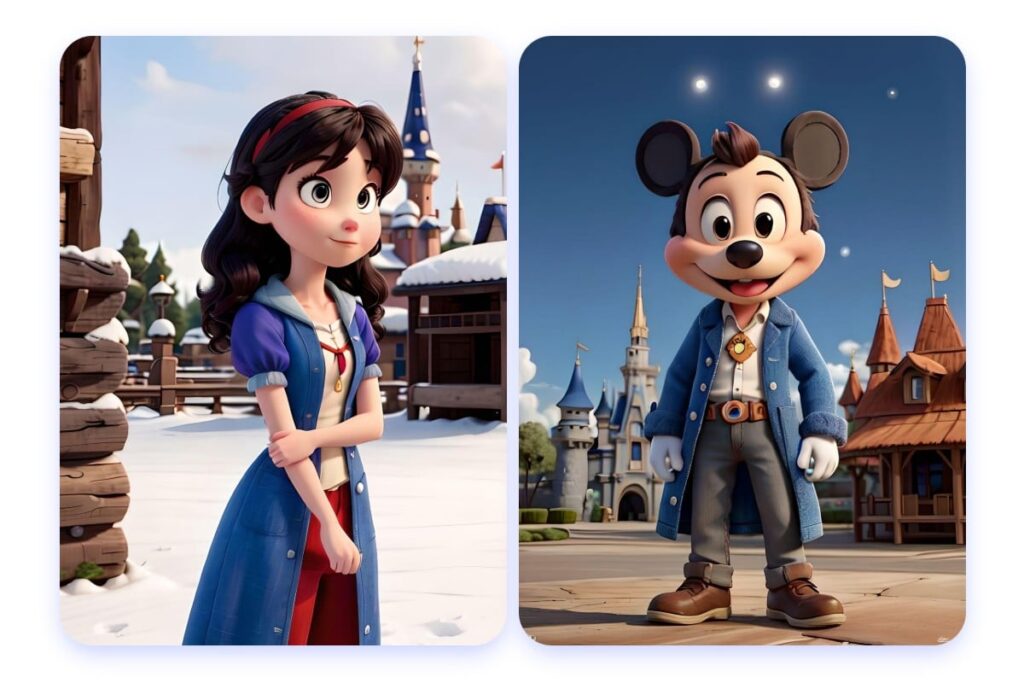

Disney has ploughed a $1 billion into OpenAI’s new text‑to‑video tool Sora, giving the world’s biggest media conglomerate the right to let users generate short clips starring Marvel, Pixar and Star Wars icons – but the service is still blocked for European users, who can only watch it via a VPN. European access is currently restricted, even as Disney’s chief, Bob Iger, pitches the move as a “thoughtful and responsible” way to extend the brand’s reach.
The cash injection is not just a vanity project. In March 2024 Disney announced a $500 million strategic investment in OpenAI to co‑develop Sora‑based pipelines, and the company’s own earnings call later that year hinted that the technology could shave 10‑15 % off production lead‑times for secondary content. A joint whitepaper with OpenAI even projected up to $120 million in annual savings on Disney’s direct‑to‑consumer short‑form slate by 2027, by letting artists focus on creative supervision rather than rote in‑between work.
Sora’s engine builds on OpenAI’s multimodal diffusion models, adding a temporal diffusion process that can spin out a 15‑second, 4K video clip in under twelve minutes of GPU compute. The platform’s “Character DNA” module lets studios upload existing character rigs and have the AI recreate them in fresh scenarios while preserving brand‑specific visual signatures. Disney has already showcased 30 micro‑scenes featuring classic characters in contemporary settings, demonstrating how a simple text prompt can become a ready‑to‑edit animation file.
Europe, however, is tightening the screws. The AI‑Enabled Copyright Directive, which took effect on 1 January 2025, defines “computer‑generated works” and grants copyright only when a “human‑originated creative contribution” can be shown (Article 5). It also obliges distributors to embed machine‑readable attribution of the AI model and prompt under the EU’s transparency rules. The revised Audiovisual Media Services Directive adds an “AI Annex” that forces platforms to conduct an AI impact assessment and caps AI‑generated characters at 30 % of core programming unless a cultural exception applies. Moreover, the 2023 Media Ownership Regulation limits non‑EU equity to 30 % and demands that AI‑generated pipelines be locally hosted (Article 6).
The regulatory maze is already reshaping market dynamics. The European Audiovisual Observatory forecasts that AI‑enhanced video minutes on OTT platforms will rise by 12 million by 2027 (2024 forecast), and streaming services must meet a 30 % European‑content quota (2024 update). Disney is therefore courting local partners – a recent Variety report notes a co‑production with StudioCanal to deliver a French‑language micro‑series that satisfies the quota while leveraging Sora’s efficiency (2025 collaboration). Even publishers are testing the waters: Penguin Random House Germany used Sora to create animated page‑turn videos that lifted online sales by 18 % (2025 study), but must pair AI output with author‑crafted prompts to retain copyright under the new directive.
In short, Disney’s billion‑dollar gamble could rewrite the economics of European content creation – if the company can navigate a legal landscape that demands human‑originated creativity, transparent AI provenance and locally‑hosted infrastructure. As the European Court of Justice recently affirmed that “prompt engineering constitutes a sufficient human contribution” for copyright (ECJ Judgment, 2025), Disney’s European subsidiaries now have a clear, if demanding, roadmap: document every prompt, embed attribution metadata, and keep the AI engines on EU soil. Those who master the balance between AI speed and cultural compliance will emerge as the new gatekeepers of trans‑Atlantic entertainment.
Image Source: www.fotor.com