
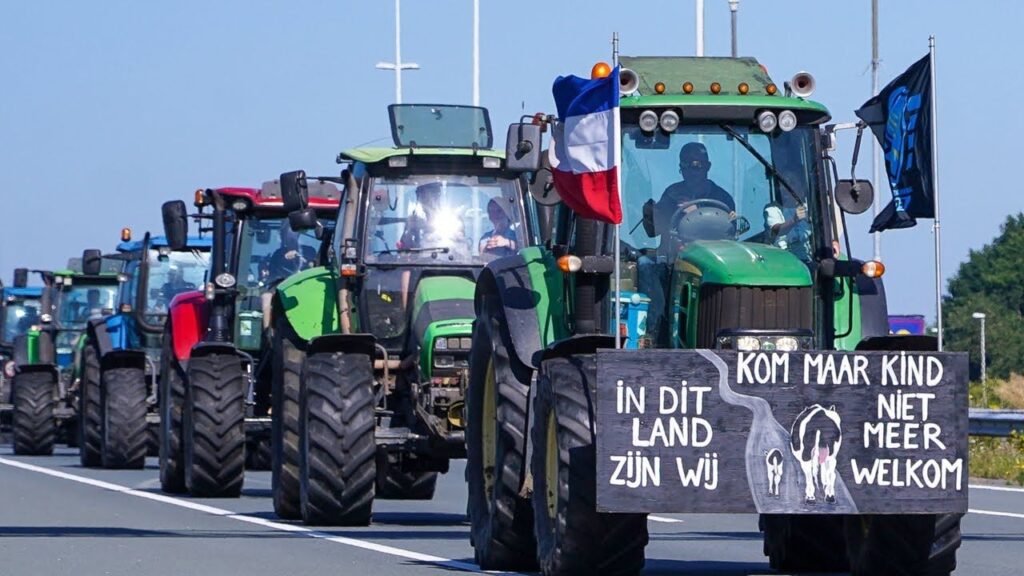

Dutch hard‑line farmers have turned bailiffs into protest tools, storming regional politician offices in North‑Brabant and warning of “economic retaliation” if the nitrogen‑reduction agenda is not softened Dutch hard‑line farmers sent bailiffs to the offices of North‑Brabant politicians. The intimidation campaign, echoed in a BBC Business report BBC noted the escalation as a new, confrontational phase of Dutch agrarian unrest, has reignited fears that the Netherlands’ role as a European food‑logistics hub could be jeopardised overnight.
Why does a protest in a Dutch province matter to British shoppers? Roughly 12 % of the UK’s wheat imports and 18 % of its cheese supply come from the Netherlands, funneled through Rotterdam’s deep‑water ports and the “Euro‑gate” rail corridor the Dutch Grain Hub processes about 3 million tonnes of wheat a year for the UK. The same logistics network also handles the bulk of Dutch dairy exports, meaning any blockage of the A2 motorway or the Betuweroute rail line could stretch delivery times from 48 hours to weeks Reuters highlighted the EU’s tightening nitrogen caps as the policy trigger behind the protests.
British supermarkets have not been caught flat‑footed. Tesco maintains a “30‑day safety stock” of wheat and rye in Midlands silos Tesco disclosed its strategic grain reserve, while Sainsbury’s runs a buffer warehouse holding roughly 150,000 tonnes of wheat and barley ready for rapid redeployment. To hedge against a Dutch shutdown, Asda signed a five‑year “North‑African Grain Diversification Deal” securing up to 200,000 tonnes of wheat per year from Morocco, and Morrisons opened a “Baltic Grain Corridor” that ships cereal via RoRo vessels from Latvia and Estonia, deliberately bypassing Dutch ports Morrisons’ Baltic corridor contracts. These contracts are triggered automatically if Dutch arrivals dip below the 5 % weekly forecast threshold.
For the average consumer the fallout could be subtle but noticeable. Past EU farmer protests have nudged UK food prices up by under 1 % thanks to such contingency planning The Guardian reported that stockpiling limited price spikes during the 2024 grain crunch. In a worst‑case scenario, supermarkets might temporarily raise the price of bread and butter by a few pence per loaf or block, and shelf space for Dutch cheese could tighten while alternative European varieties fill the gap. However, the combined effect of strategic reserves, alternative sourcing and real‑time market intelligence means a full‑scale stock‑out is unlikely EFSA’s latest import data confirms the UK’s diversified supply chain remains resilient.
The message to policymakers in The Hague is clear: any prolonged disruption of the Dutch grain and dairy flow will test the robustness of the UK’s food‑supply safety net, but supermarkets have already built a multi‑layered defence that should keep the British plate full and prices relatively stable.
Image Source: youtube.com