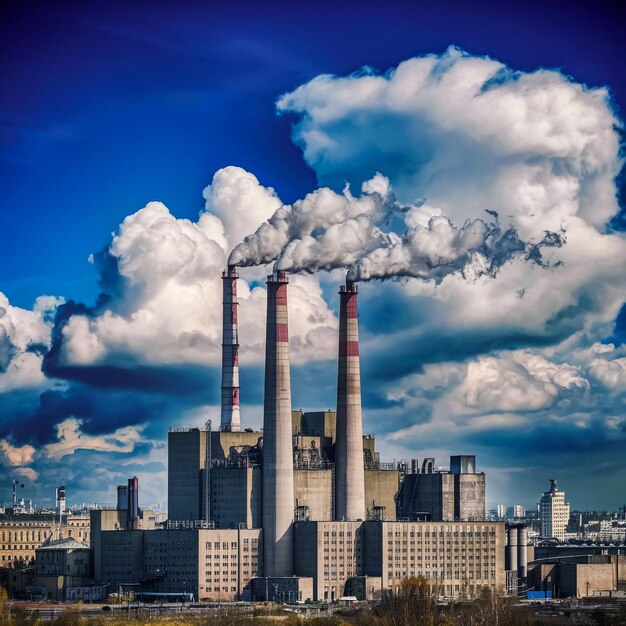

France is firing a salvo at the continent’s heavy‑industry decline, but the battle is already being judged on the size of the subsidies on the table – and on a courtroom‑like EU competition regime that decides whether those subsidies even count. Paris’s “Industrial Renaissance” roadmap, unveiled in early 2024, promises multi‑billion‑euro state aid for low‑carbon steel, chemical‑recycling, new nuclear capacity and green‑hydrogen, yet the exact figures remain shrouded in secrecy. While Germany has openly pledged €7 billion for low‑carbon steel, France is still a “next‑largest” player with no disclosed amount, leaving the French revival teetering on a diplomatic tightrope.
The French plan rests on four pillars. First, it seeks to decarbonise steel by subsidising hydrogen‑based or electric‑arc furnaces. Second, it backs chemical‑recycling projects that turn mixed plastic waste into polymer feed‑stock – a scheme that won EU clearance in June 2025 under the General Block Exemption Regulation (GBER). Third, the government has submitted a €‑heavy dossier on 5 December 2025 to fund six new reactors, a request now awaiting the Commission’s verdict. Fourth, it offers contracts for renewable‑hydrogen production and rail‑freight subsidies to shift cargo off the road. All of these initiatives are framed as essential to preserve high‑skill jobs and to meet the EU’s 2030 climate targets, but the lack of publicly disclosed budgets makes it difficult to gauge whether France can truly keep pace with its neighbours.
Germany’s €7 billion low‑carbon steel programme, announced on 11 December 2025, now serves as the benchmark for the race to dominate Europe’s future steel market. Italy, not to be outshone, secured €1.5 billion of clean‑tech state aid under the Clean Industries Agreement State‑Aid Framework (CISAF) on 21 November 2025, explicitly positioning its scheme as a counter‑measure to other Member‑State initiatives. Spain and other neighbours have stayed silent, offering no public comment on Paris’s ambitions, while French media outlets that normally track industrial finance have not published any quantitative details on the subsidies – a silence that could be strategic or simply a lag in reporting.
EU Competition Law – The Rules of the Game
All public support that may affect trade between Member States falls under Article 107(1) of the Treaty on the Functioning of the European Union, which bans state aid unless it serves a common interest and does not distort competition. The General Block Exemption Regulation, adopted on 17 June 2014 and effective from 1 July 2014, lists categories of aid that are automatically compatible with the internal market, provided they respect set thresholds. For climate‑focused, large‑scale programmes, the Commission applies the Clean Industries Agreement State‑Aid Framework (CISAF), which adds climate‑compatibility tests to the existing GBER and Article 107(1) criteria. The Commission’s recent approval of France’s chemical‑recycling scheme and its pending review of the nuclear package illustrate how the EU acts as both gate‑keeper and arbiter, ensuring that national subsidies do not tilt the level playing field.
The practical impact of these rules is already evident. The chemical‑recycling aid cleared in June 2025 demonstrates that French projects can fit within the GBER’s thresholds, but the pending nuclear dossier will be scrutinised under both GBER and CISAF, potentially exposing any imbalance with Germany’s far larger steel fund. If the Commission finds France’s aid insufficiently justified or overly distortionary, it could force Paris to redesign its packages, delaying the industrial revival and ceding further ground to Berlin.
What this means for European competitiveness is stark. Low‑carbon steel is a cornerstone for automotive, construction and defence sectors; the first mover to secure a robust, subsidised supply chain will capture a sizeable slice of future demand. Germany’s openly disclosed €7 billion puts it ahead, while France’s opaque commitments risk being perceived as a “trailing” effort. The EU’s competition safeguards prevent outright market distortion, yet they also highlight the need for a coordinated Europe‑wide approach – perhaps joint financing instruments or harmonised aid caps – to avoid a fragmented subsidy landscape that could undermine the very climate and industrial goals the Member States share.
In short, France’s heavy‑industry push is a high‑stakes gamble played out on a tightly regulated EU stage. The success of the “Industrial Renaissance” will hinge not only on the size of the subsidies but on the Commission’s willingness to endorse them as fair, climate‑compatible aid. As Germany and Italy already demonstrate, the race is on, and the EU’s competition law will decide whether the playing field stays level or tilts in favour of the louder, better‑funded neighbours.
Image Source: www.freepik.com