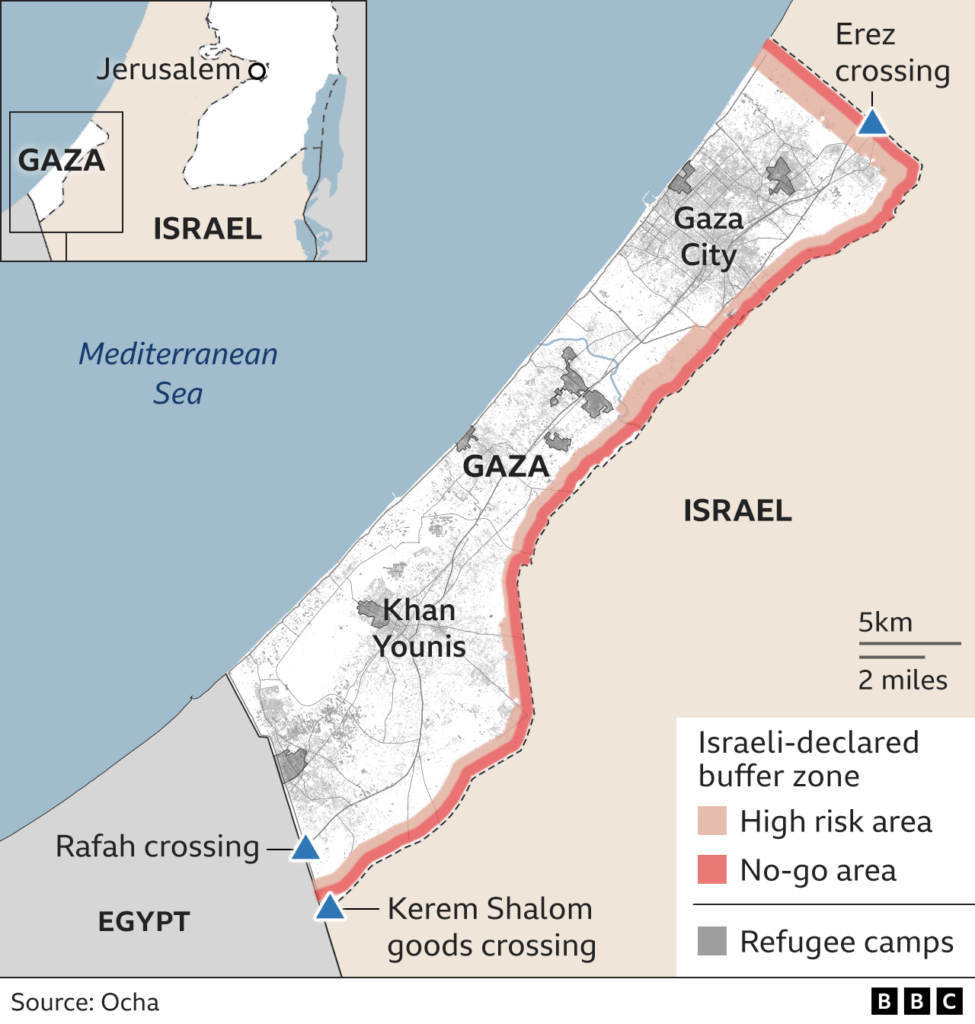

Fresh hostilities erupted in Gaza on the night of 20 December 2025, with Israeli forces launching a new offensive that was met almost immediately by Hamas‑fired rockets into Israeli territory. The clash, which reignited on 21 December, sent shockwaves across the Middle East and sent the EU scrambling for a response. Casualties on both sides have already climbed into the hundreds, and the humanitarian toll is mounting as civilian infrastructure is hit and aid corridors are blocked.
The situation on the ground is stark: the United Nations estimates that over a thousand civilians have been killed in the first three days, while the Israeli military reports dozens of Hamas fighters dead. Rockets have landed in several Israeli towns, forcing evacuations and triggering a security clamp‑down. In Gaza, airstrikes have destroyed schools, hospitals and residential blocks, leaving thousands displaced and the already fragile humanitarian network stretched to breaking point.
Against this backdrop the EU’s most visible action has been a €4.35 million boost to its “Protect Aid Workers” programme, announced on 17 December. The funding is earmarked for shielding local humanitarian staff from the escalating danger—covering protection measures, post‑incident support and legal fees for those threatened or detained. Yet the programme is a long‑term safety net: it has already supported over 450 aid workers and their families, and in 2025 alone the EU recorded 326 aid‑worker deaths on duty, a drop from 385 in 2024 but still alarmingly high.
Politically, Brussels has taken a vocal but largely rhetorical stance. EU officials, frustrated by what they called “misreading Belgium” and “unbearable tragedy,” called for “clear actions” on 22 December. The call came amid a flurry of diplomatic chatter, but no new sanctions or formal cease‑fire appeals were publicly announced by any member state in the 48 hours that followed the escalation. The European Council’s 18 December meeting, whose minutes are still unavailable, may hold the details, but the lack of a coordinated, high‑profile statement is telling.
The absence of fresh convoys or sanctions risks eroding the EU’s credibility as a rapid‑response actor. While the Protect Aid Workers funding demonstrates a commitment to personnel safety, it is not tailored to the immediate surge of civilian suffering. Without visible, concrete aid flows or a unified diplomatic push for a cease‑fire, the EU may appear reactive rather than decisive, a perception that could weaken its influence in the region and embolden hard‑line actors.
Looking ahead, the EU faces a narrow window to convert policy intent into palpable action. If member states can marshal a swift, cohesive appeal for humanitarian corridors, coupled with a calibrated sanctions package targeting key actors, they can restore confidence among both the international community and the beleaguered populations of Gaza and Israel. Failing that, the EU risks being seen as a passive observer, a status that would have long‑term implications for its role in Middle‑East diplomacy and its ability to shape regional stability.
In sum, the 21‑22 December flare‑up has highlighted a gap between the EU’s institutional frameworks and its operational agility. For future crises, the Union must learn to translate its humanitarian commitments into rapid, high‑visibility responses—especially in the first 48 hours—if it is to maintain its standing as a stabilising diplomatic actor in an increasingly volatile world.
Image Source: www.bbc.co.uk