
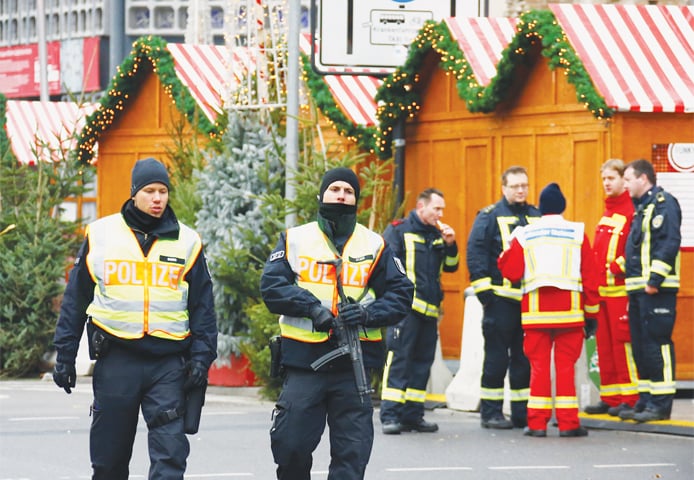

The Bad Tölz Christmas‑market attack was stopped in a single night, not by a lone German hero but by a tightly‑woven EU security net that moved faster than the plotters could drive a van into a crowd. Within hours of a foreign intelligence tip‑off, five suspects were in custody and a fifth placed in preventive detention – a textbook example of the “Security Union” in action. The operation laid bare how real‑time data sharing, joint investigative teams and harmonised legal tools can turn a looming tragedy into a political win.
Q: What made the German response so swift?
Security analyst, Europol Counter‑Terrorism Centre (ECTC) – “The SIS II alert went live the moment the tip arrived, flagging the suspects across all Member States. That, combined with passenger‑name‑record data, gave us a live map of their movements. In a matter of hours the German task force could pinpoint where the suspects were gathering.”
Q: Which legal mechanisms allowed arrests in multiple jurisdictions?
Eurojust spokesperson – “The Terrorist Offences Directive and the Framework Decision provide a common definition of terrorism and a streamlined process for European Arrest Warrants. In this case the warrants were issued and executed almost automatically, bypassing the slower mutual‑legal‑assistance routes that have hamstrung past operations.”
Q: How does this case shape future cross‑border cooperation?
German Federal Prosecutor’s Office (Munich) representative – “We now have a concrete template for Joint Investigation Teams under the JIT Regulation. The Bad Tölz case will be fed into the EU Knowledge Hub’s best‑practice guide, ensuring that every Member State can replicate the rapid intelligence‑to‑action chain.”
Timeline of the Bad Tölz plot
– Early December 2023 – A foreign intelligence service alerts German authorities to a possible vehicle‑borne attack on the Bad Tölz Christmas market.
– Within hours – The Central Office for Combating Extremism and Terrorism (ZET) and the Bavarian State Office for the Protection of the Constitution (LfV) activate the investigation, pulling in the Federal Criminal Police Office (BKA) and Bavarian State Police.
– Simultaneously – Europol’s ECTC circulates a SIS II alert; Eurojust opens a Joint Investigation Team, and the European Arrest Warrants are drafted under Directive 2017/541.
– 1 December 2023 – Four suspects are arrested in Augsburg; a fifth is placed in preventive detention in Munich. The arrests are executed on the basis of the EAWs and coordinated via Eurojust’s digital exchange platform (Regulation 2023/2131).
– Post‑arrest – Evidence from passenger‑name‑record data and intercepted communications is uploaded to the EU Counter‑Terrorism Register, giving investigators a unified dossier for prosecution.
The Bad Tölz operation proves that when EU databases, legal harmonisation and joint teams click into place, the window for a terrorist strike can shrink to minutes. It also sets a clear benchmark: future plots will have to contend with an ever‑more seamless Security Union, where a tip in Brussels can trigger arrests in Bavaria before a bomb can be loaded.
Image Source: www.dawn.com