
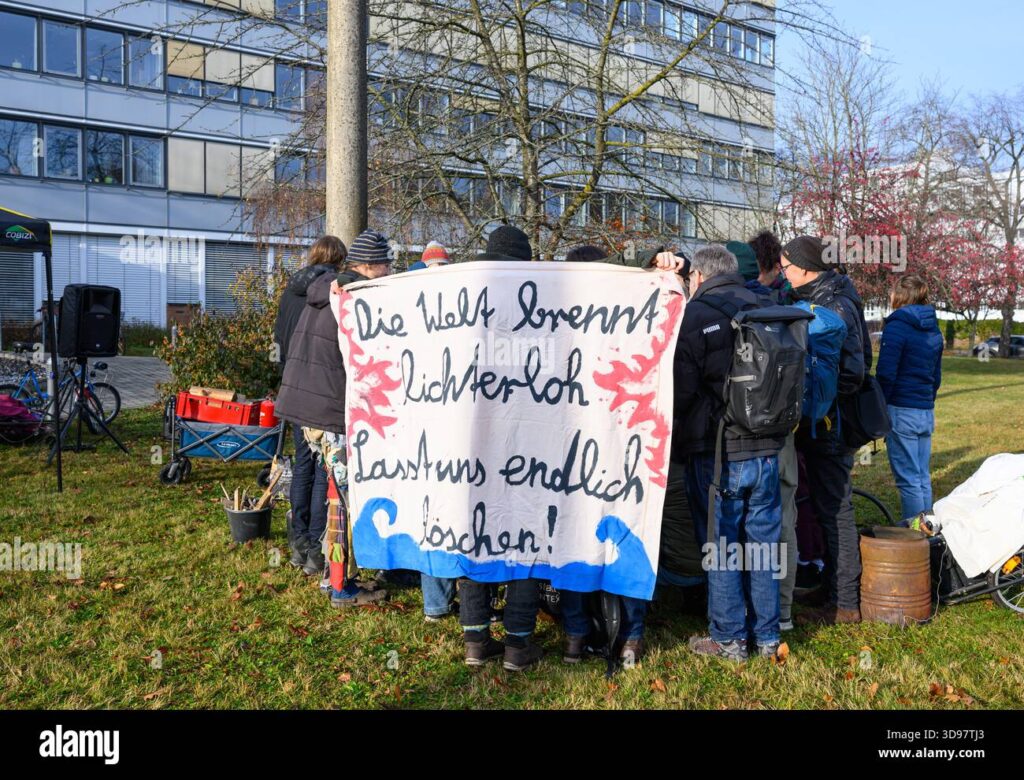

The German Federal Constitutional Court tore up the backbone of the nation’s climate law in a decisive April 2024 judgment, declaring the sector‑specific 2030 caps and the “climate‑neutral by 2045” trajectory unconstitutional. By striking down § 3 Abs. 1 Satz 2 and § 4 Abs. 1 Satz 3 (together with Annex 2), and, according to media reports, also §§ 4 Abs. 1 Satz 6, 10 and § 9 Abs. 1 Satz 1, the court has left a legal vacuum that the government must fill before the EU’s 2030 emissions target can be safely met.
The court’s reasoning hinged on the principle of proportionality and the constitutional duty to protect life, health and the environment for present and future generations. It found the law’s failure to provide a forward‑looking, scientifically justified pathway to net‑zero by 2050 incompatible with Articles 2 and 20 of the Basic Law. In short, a climate statute that only looks to 2030 without a credible long‑term trajectory cannot be considered proportionate or necessary.
Berlin’s response is a rapid‑fire legislative overhaul announced in July 2025. The government will keep the 65 % reduction target for 2030 and the 2045 neutrality goal, but it will embed them in a “comprehensive climate‑protection programme” that adds sector‑specific measures, a negative‑emissions strategy (due Q3 2025) and up to three percentage points of internationally certified emission reductions. New tools such as large‑scale carbon capture and storage (CCS) and a uniform CO₂‑pipeline permit regime are also being woven into the package.
On the ground, Germany’s emissions fell by 3.4 % to 649 Mt CO₂‑eq in 2024, keeping the country on track for its national target. Preserving the 65 % cut and adding flexibility through international credits should allow Germany to continue contributing solidly to the EU’s collective 55 % reduction ambition. However, the legislative gap risks a temporary loss of certainty for businesses operating under the EU‑ETS, potentially dampening investment until the revised law is enacted.
The knock‑on effects for the EU are profound. Germany accounts for a large share of ETS allowances; a tighter national cap will tighten the overall EU‑ETS ceiling, reinforcing the bloc’s 2030 goal of a 62 % reduction in covered emissions. Conversely, any delay in passing a constitutionally sound law could force the EU to compensate by imposing stricter caps on other Member States or expanding the use of international credits, reshaping the distribution of effort across the Union.
Beyond the numbers, the ruling sets a legal precedent that could inspire climate litigation in other Member States. By demanding a science‑based, long‑term trajectory, the German court raises the bar for constitutional scrutiny of climate statutes, nudging the whole of Europe towards more robust, intergenerationally responsible climate policies. The emphasis on CCS and negative‑emissions strategies may also accelerate the EU’s own roadmap for these technologies under the Fit‑for‑55 package.
In sum, the BVerfG’s decision is a watershed moment: it forces Germany to embed a credible net‑zero pathway into its core legislation, safeguards the nation’s contribution to the EU’s 2030 climate ambition, and potentially reshapes the legal landscape for climate action across Europe. The coming months will test whether Berlin can translate the court’s constitutional demands into a workable, forward‑looking climate framework before the EU’s green deadline looms.
Image Source: www.alamy.com