
President Donald Trump has dusted off a long‑standing American fantasy – the outright purchase of Greenland – and the move has ignited a diplomatic blaze that now stretches from Washington to Brussels and onto the streets of Copenhagen. Within days of the president’s 17 January declaration that the island is “critical to our national security,” the United States slapped the prospect with a punitive 10 % tariff on Danish imports, threatening to hike it to 25 % by June if the “complete and total purchase” is not secured. The audacious gambit has forced Denmark to lean on a layered legal framework while the European Union scrambles to defend a rule‑based order in the high Arctic.
Denmark’s claim rests on three pillars of hard‑won law. First, the 1951 Defence of Greenland Agreement – a bilateral treaty that granted the United States permission to run the Thule Air Base but explicitly tied that concession to Danish sovereignty over the island. Second, the Self‑Government Act of 21 June 2009, which was enshrined in the Danish Constitution after a 2008 referendum where 75.5 % of Greenlanders backed a greater degree of autonomy and affirmed the “Unity of the Realm.” Finally, a joint statement issued on 6 January by France, Germany, Italy, Poland, Spain, the United Kingdom and Denmark invoked the UN Charter and Article 42(7) of the Treaty on European Union, reminding the world that any alteration of Greenland’s status must be decided by Denmark and the Greenlandic people alone.
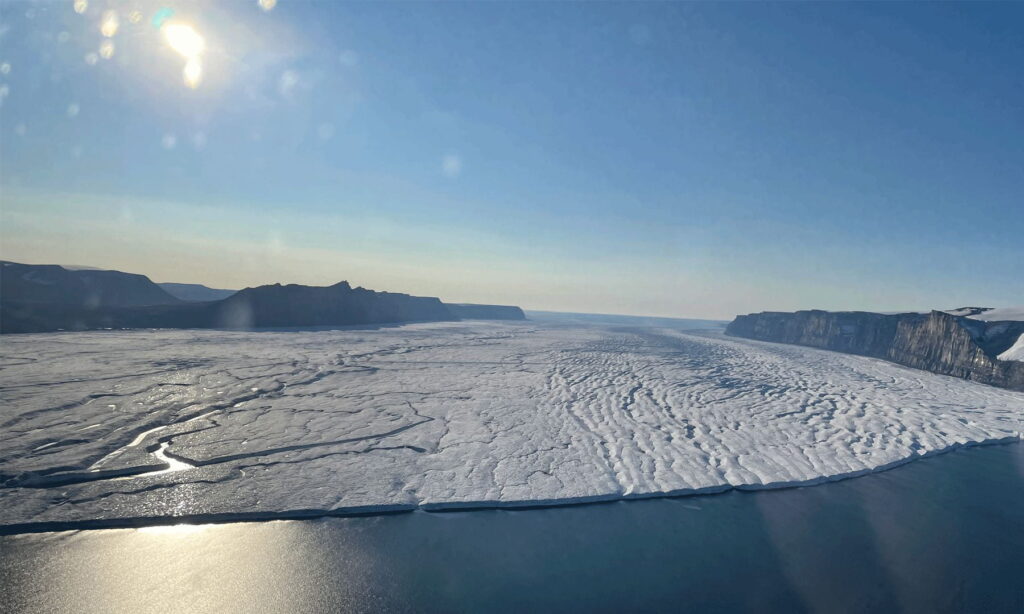
Washington’s arguments are equally multifaceted. The Trump administration has framed Greenland as a linchpin in a “critical strategic position between North America and the Arctic,” essential for early‑warning missile detection from the upgraded Pituffik Space Base. At the same time, the island sits atop roughly 1.5 million tonnes of rare‑earth minerals – the Kvanefjeld and Tanbreez deposits – a sector in which the U.S. Export‑Import Bank already pledged a $120 million loan to Critical Metals Corp in June 2025. Add to that the melting sea ice that could open a 7,000 km shortcut via the Northwest Passage, and Trump argues that control of Greenland would hand the United States a decisive edge over China and Russia in both trade and military projection.
Europe’s reaction has been swift and coordinated. On 14 January the European Parliament’s Conference of Presidents issued a joint condemnation, branding the American overtures a “blatant challenge to international law” and pledging concrete support to Denmark and Greenland. Two days earlier, European Commissioner Olivia Coppens warned that a U.S. military takeover would “effectively end NATO” and announced a boost in Arctic‑related funding, while French Finance Minister Roland Lescure warned Washington that any seizure would cross a “red line” threatening trans‑Atlantic economic ties. The EU’s political firepower was underpinned by a security dimension: Belgian Defence Minister Theo Francken called for a NATO Arctic mission modelled on the Baltic Sentry project, and German Defence Minister Boris Pistorius pledged expanded German capabilities in the region.
NATO itself has moved from rhetoric to planning. Secretary‑General Mark Rutte announced on 12 January that the alliance was drafting “next steps” to protect Arctic security, citing heightened Russian and Chinese activity along newly opened sea lanes. Germany’s Chancellor Friedrich Merz and Foreign Minister Johann Wadephul both signalled willingness to contribute troops and infrastructure, while the European Commission’s Defence and Space portfolio floated the idea of deploying warships and anti‑drone systems to Greenland. The seven‑nation joint declaration of 6 January, which praised the United States as an “essential partner” yet stressed that “Greenland belongs to its people,” now serves as the diplomatic scaffolding for these collective defence measures.
The diplomatic showdown spilled onto the streets on 17 January, when thousands gathered at Copenhagen’s City Hall Square and marched toward the U.S. embassy. The rally, organised by the Greenlandic diaspora association Uagut and a coalition of Danish civil‑society groups, unfurled a sea of Greenlandic flags and slogans such as “Greenland is not for sale” and “Make America Go Away.” Parallel demonstrations erupted in Aarhus, Aalborg, Odense and Nuuk, underscoring a pan‑national repudiation of any external attempt to redraw the island’s status. While the protests have not yet altered the diplomatic calculus, they have amplified public pressure on the Danish government and provided a vivid backdrop for the EU’s calls to uphold sovereignty, territorial integrity and the inviolability of borders.
What began as a presidential bragging‑rights campaign has morphed into a test of the Atlantic security architecture. The standoff pits historic defence treaties and constitutional self‑government against a U.S. strategy that blends military, mineral and commercial ambitions, while the European Union marshals political condemnation, legal safeguards and NATO‑aligned force planning. How the parties navigate this Arctic flashpoint will set a precedent for future disputes over the high‑north, signalling whether the rule‑based order can survive the lure of resource‑rich frontiers and great‑power rivalry.
Image Source: blogs.sjsu.edu