
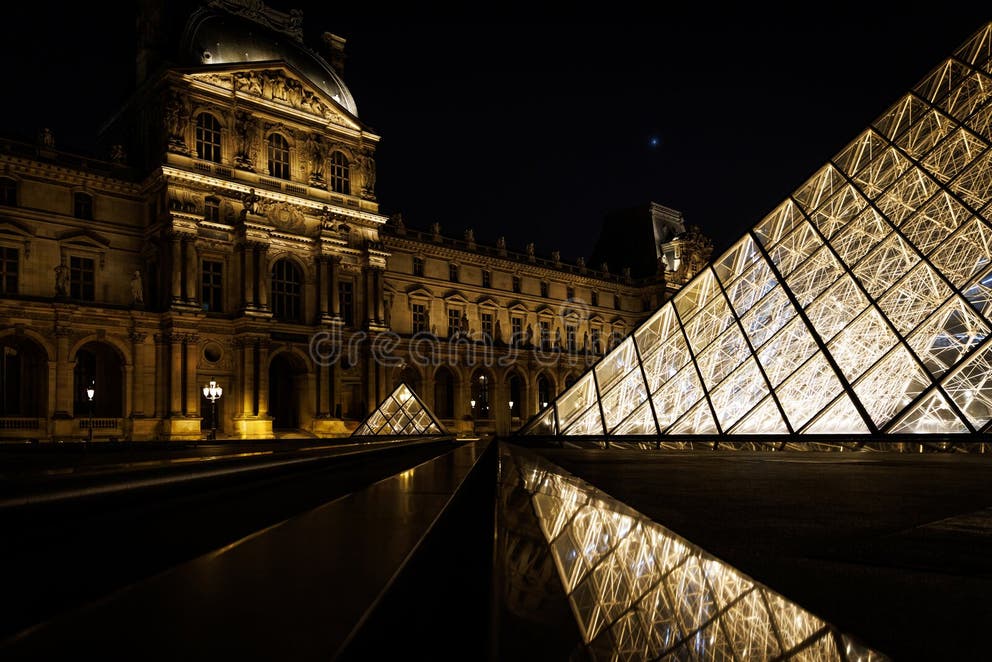

The Louvre was robbed in broad daylight on 19 October 2025, and the world watched the audacity unfold like a heist film on a Parisian stage. Within four minutes of breaching the glass façade, a crew of professional thieves walked out with eight priceless pieces of the Imperial Crown Jewels, vanishing onto scooters along the Seine before the police could react. The brazen operation has forced Europe’s cultural custodians to treat museum security as a matter of national defence.
The plot began with a small convoy pulling into the museum’s western courtyard just before the doors opened. A mover’s truck, fitted with an extendable ladder, was parked directly beneath the Apollo Gallery, the room that houses the crown jewels. Exploiting a blind spot on the eastern balcony – a gap in the Louvre’s exterior camera network – the gang used an angle grinder to slice through the balcony glass at 9:30 a.m., creating a direct route onto the second‑floor balcony. Within seconds the alarm on the high‑security display cases wailed, staff scrambled to evacuate visitors and radio the intrusion, but by 9:38 a.m. the thieves were already racing away on high‑speed scooters, leaving behind a single helmet and a scooter that later yielded DNA evidence.
The loot was nothing short of regal: the sapphire tiara, necklace and earring of Queen Marie‑Amalie, the emerald set of Empress Marie Louise, and the tiara, bodice‑bow brooch and crown of Empress Eugénie de Montijo – the latter recovered later, albeit damaged. Prosecutors put the stolen jewellery’s value at a staggering $102 million, underscoring how cultural heritage can be as lucrative as any corporate heist.
In the wake of the breach, French authorities approved a €580 million security overhaul – the biggest single‑site investment in museum protection in Europe’s history. More than €90 million of that budget is earmarked for a state‑of‑the‑art command centre, while the physical fabric of the Louvre has been fortified with two 12‑tonne black iron gates, reinforced concrete lintels and roughly 100 new exterior cameras to seal the once‑exploited blind spot.
The technological upgrade reads like a sci‑fi security suite. 3D LiDAR scanners perched above the new gates monitor a two‑metre radius, instantly flagging any unauthorised approach. AI‑driven video analytics sift through live feeds, separating ordinary foot traffic from suspicious behaviour and routing alerts straight to the upgraded command centre. Redundant power supplies guarantee that a blackout can never again provide cover for thieves. Inside, biometric turnstiles and RFID‑enabled staff badges now control access to the most sensitive zones, while dedicated security corridors keep personnel away from vulnerable displays.
The Louvre’s transformation has become a template for museums across the continent. Institutions from Berlin to Barcelona are installing heavy‑duty gates and blast‑resistant glazing, mirroring the iron‑gate solution that now dominates the Louvre’s façade. AI‑powered surveillance is being rolled out to plug the very kind of camera gap that the Paris crew exploited, and RFID plus biometric controls are rapidly becoming the EU standard for staff access. Even the rapid‑response model – a mobile police unit patrolling the roundabout in front of the glass pyramid – is being examined as a blueprint for coordinated European museum security.
Security experts agree that the heist proved three immutable truths: a single blind spot can undo the most sophisticated systems; layered physical and digital defences are essential; and response times must be compressed to seconds, not minutes. The €580 million spend signals a paradigm shift: cultural heritage is now viewed through the same strategic lens as critical infrastructure, with governments ready to pour public money into its protection.
The Louvre episode is not an isolated anomaly. A December 2025 AP report highlighted a spate of high‑profile art thefts across Europe, noting that many institutions are still scrambling to formalise concrete security strategies. From the audacious daylight robbery in Paris to quieter smash‑and‑grab attempts in smaller galleries, the continent is confronting a new wave of cultural crime. The lessons learned at the Louvre – eliminating blind spots, integrating AI, and treating heritage as a security priority – are set to become the defensive playbook that keeps Europe’s priceless treasures out of the hands of opportunistic thieves.
Image Source: www.dreamstime.com