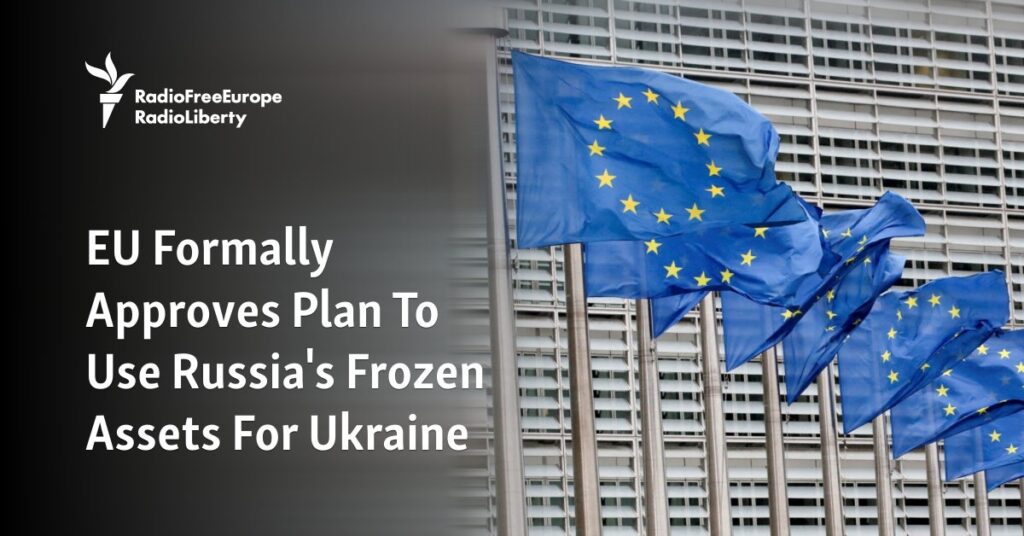

The EU finally locked away the full €210 billion of Russian sovereign assets – and it did so by sidestepping Viktor Orban’s veto with a legal sleight of hand that will reshape future sanctions. After months of dead‑lock, the Council of Ambassadors invoked the rarely used Article 122 “emergency” procedure on 12 December 2025, converting a unanimity‑required measure into a qualified‑majority vote and cementing an indefinite freeze that no single Member State can overturn.
Hungary, backed by Slovakia, had turned the semi‑annual renewal of the freeze into a de‑facto veto. Every six months the Council had to act unanimously to keep the assets immobilised, and Budapest warned it would block any renewal on sovereignty grounds and to placate a domestic electorate hostile to EU‑driven sanctions. The threat was real: a failure to renew would have released the funds back to the Russian Central Bank, undermining Kyiv’s financing and the Union’s credibility.
The breakthrough came not from a diplomatic compromise but from a treaty‑based shortcut. Article 122 grants the Council “special powers” in economic emergencies, allowing decisions by qualified‑majority voting without European Parliament involvement. By invoking this clause, the Council stripped Hungary of its procedural weapon and handed the European Commission emergency authority to manage the assets. The same day the decision was taken, the Council also rewrote the freeze itself – swapping the six‑month renewal cycle for an “indefinite immobilisation” that will last until Russia pays reparations for its war in Ukraine.
The legal scaffolding was reinforced by Article 215(2) of the TFEU, which the European Court of Justice affirmed in its October 2025 Timchenko judgment as the substantive basis for asset‑freeze regimes. Regulation (EU) 2024/2642, adopted in October 2024, explicitly cited Article 215, ensuring the emergency decision could survive any Hungarian challenge. The assets now sit in two blocks – €185 billion at Euroclear in Brussels and €25 billion in private banks – and are managed by the Commission under the emergency mandate.
Crucially, no material quid‑pro‑quo was offered to Orban’s government. The record shows no budget rebates, policy swaps or bilateral incentives. Instead, the EU leaned on the rule‑of‑law conditionality that has already seen part of Hungary’s funding withheld, applying pressure without a formal concession. The narrative presented to the Council was clear: the freeze was “necessary to avoid further repercussions of unprecedented magnitude on the Union’s economic situation” caused by Russia’s aggression, a security‑driven justification that rallied a majority of Member States around the emergency route.
The 12 December 2025 decision establishes a new procedural template for EU sanctions. By converting unanimity‑required measures into qualified‑majority votes under Article 122, the Council now possesses a fast‑track mechanism to bypass any single‑state veto when “serious economic impact” can be demonstrated. It also strengthens the Commission’s autonomous role once emergency powers are granted, a development confirmed by the ECJ’s recent ruling. The shift from periodic renewals to a permanent immobilisation removes the bargaining chip that previously allowed dissenting members to extract concessions, signalling that future sanctions may be drafted as condition‑linked or indefinite from the outset.
The precedent will not go unchallenged. Hungary’s legal push‑back underscores the tension between collective security and Member State sovereignty, and other reluctant capitals may test the emergency route pre‑emptively. Yet the EU has now proved it can marshal treaty tools, legal authority and political pressure to act decisively in a crisis – a diplomatic masterclass that will reverberate through every sanction debate that follows.
Image Source: www.rferl.org