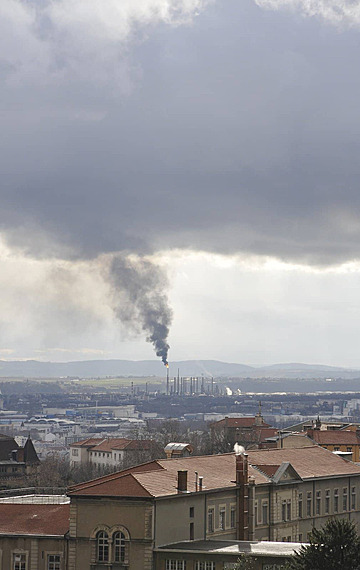

The blast at Elkem Silicones’ pilot workshop in Saint‑Fons on 22 December 2025 sent shockwaves through Europe’s “chemical valley” and forced more than 100 000 residents to shelter in place. Four workers were hurt, three critically, and one later died – a stark reminder that even a Seveso‑III site, designed to the highest EU safety standards, can become a death trap. Within hours the A7 motorway was shut, rail lines halted and river traffic suspended, while the regional ORSEC plan was activated and FR‑Alert messages blared across the Rhône‑Alpes region.
The technical probe, led by the Ministry of Labour’s DGIT and the BEAT, has already identified three plausible failure points: a pressure‑relief valve that may have stayed shut, temperature‑sensor drift that could have hidden a dangerous rise in the reactor, and irregularities in recent batch‑record logs. Yet the publicly released findings stop short of pinpointing a concrete breach of any specific safety procedure – no violation of the permit‑to‑work system, hydrogen‑storage limits or emergency‑shutdown protocols has been confirmed. The pilot laboratory, installed in 2021, was said to “meet current safety standards”, but the absence of a definitive fault line leaves the investigation hanging over a sector that proudly touts hydrogen as the clean‑energy miracle.
French trade unions moved swiftly. The CGT and CFDT have both lodged themselves as civil parties in the criminal inquiry, granting them standing to demand damages and full disclosure of the technical causes. In a joint communiqué they warned that “no worker should leave the company injured or, worse, dead”. CGT leader Jacques Lacailla branded the incident “unacceptable” and called for an immediate overhaul of work organisation, risk assessment and maintenance practices. CFDT secretary‑general Estelle Delon echoed the plea, insisting on a robust safety culture and genuine worker involvement in every risk‑assessment process. Both unions have pledged to monitor the technical inquiry, press for independent expert reviews and pursue civil compensation for the victims’ families.
Regulatory bodies are now threading the needle between emergency response and long‑term oversight. INERIS is providing scientific expertise on hydrogen hazards, while DIREN and the Ministry of Labour oversee environmental compliance and the activation – and now the lifting – of the ORSEC plan. No fines or corrective orders have been announced yet, but the Ministry has ordered an audit of permit‑to‑work compliance across all Seveso‑III facilities in the Auvergne‑Rhône‑Alpes region, signalling a willingness to tighten the reins on a sector that has long been praised for its economic might.
At EU level the Elkem disaster has become a case study in the ongoing revision of the Seveso‑III Directive. The Commission, acknowledging that major‑accident rates have plateaued, aims to align the Directive with the updated Union classification system, simplify compliance obligations and embed stronger stakeholder participation – explicitly bringing industry, workers and NGOs into the implementation loop. The incident also fuels calls from the European Trade Union Confederation and the European Environmental Bureau to fast‑track the Chemical Strategy for Europe’s safety‑case mandate, which obliges high‑risk sites to produce comprehensive dossiers proving that every major‑accident hazard has been identified and mitigated.
Parallel to the Directive overhaul, the Commission is drafting an “Industrial Safety and Resilience” (ISR) legislative package. If adopted, ISR will harmonise reporting of near‑misses across Member States, mandate periodic stress‑testing of pressure‑relief systems and give workers’ safety representatives a decisive role in verifying safety‑case dossiers. Although no binding EU law has yet been triggered directly by the Saint‑Fons blast, the incident has been repeatedly cited in stakeholder consultations as the very scenario the ISR package is designed to prevent.
What comes next will be a test of whether grief can be turned into concrete reform. The final technical report must finally name the safety protocol that failed; the courts will decide whether corporate manslaughter charges stick; and Brussels must convert its draft reforms into enforceable rules that tighten the safety net around Europe’s dense chemical clusters. If the Elkem tragedy leads to a genuine overhaul – from the factory floor in Saint‑Fons to the policy corridors in Brussels – it may spare countless lives in the valleys that fuel Europe’s industry. If not, the shock will linger as a grim reminder that even the most “high‑threshold” plants can crumble under a single, un‑addressed flaw.
Image Source: pngtree.com