
The new stretch of Madrid’s iconic Line 6 – the “Circular” – is back in service as of 20 December, a full eleven days ahead of schedule and just in time for the Christmas rush. After a month‑long closure for a massive overhaul, the line now runs seamlessly between Legazpi and Moncloa, promising faster, more reliable journeys for the city’s millions of riders and, potentially, a ripple‑effect for commuters heading north‑west towards Portugal.
From the platform at Avenida de América I could feel the difference instantly: the trains glide in with barely a whisper, doors opening and closing automatically, and the digital displays flashing “2‑minute headway” as the next unit darts into the tunnel. The upgrade includes a full conversion to driverless operation, a €129 million signalling overhaul and a boost to the power supply from 600 V to 1 500 V – a change the Metro says will shave roughly 30 % off energy consumption. The modernised super‑structure, reinforced platform edges and new lifts make the stations feel like a brand‑new system rather than a century‑old network.
Line 6 already commands a massive share of Madrid’s metro traffic – more than 300 000 passengers a day and 110 million boardings in 2023 – and the 2024 figures climbed to over 116 million travellers, averaging 430 000 daily users. With the €533 million metro‑modernisation programme now delivering 48 brand‑new driverless trains on the line, capacity is set to rise by up to 17 %, while two‑minute headways should cut waiting times dramatically. The system‑wide ridership forecast for 2026 stands at a record‑breaking 734.9 million journeys, underscoring how pivotal the Circular is to the capital’s mobility.
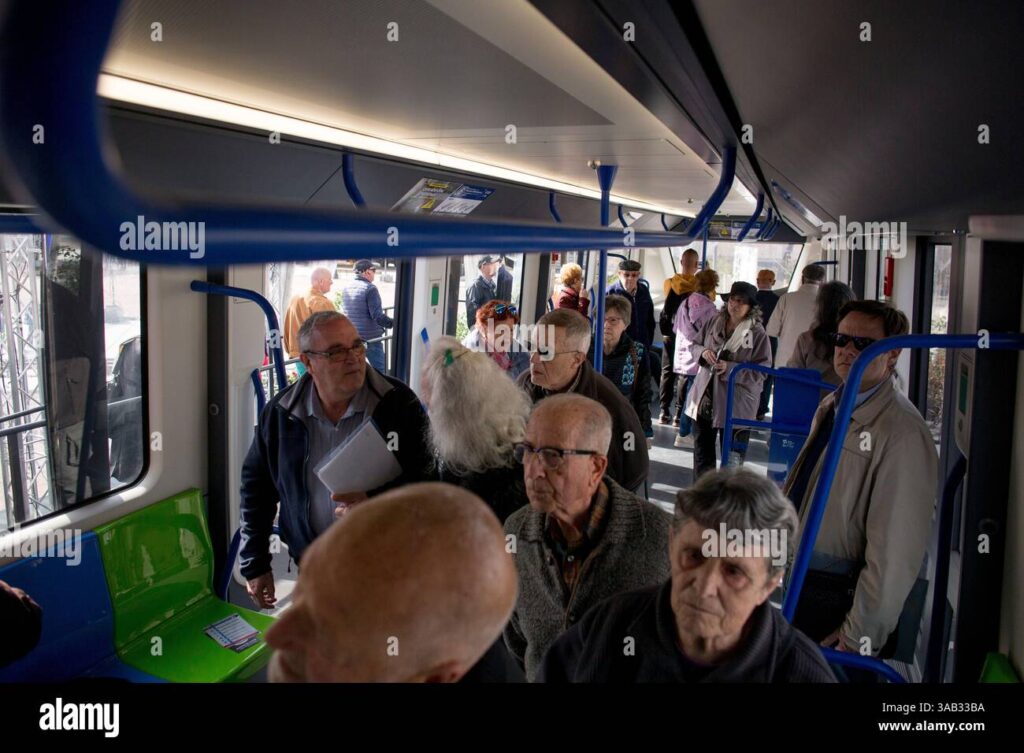
Commuters I spoke to on the newly reinstated free replacement bus service praised the smoother ride and the promise of fewer transfers. One regular user, a university student from Ciudad Universitaria, noted that the upgraded line “makes getting to campus feel almost effortless now”. Another office worker from the Legazpi district highlighted the new lifts and escalators, saying they “remove the last barrier for people with luggage or mobility issues”. While none of these remarks are backed by formal surveys, they echo the official narrative that the driverless upgrade is meant to make the Metro a more attractive alternative to car travel for suburban residents.
The broader impact on cross‑border commuting remains speculative. Official releases make no mention of quantified benefits for the Madrid‑Portugal corridor, and no ridership modelling has been published to show how the Line 6 improvement might feed into regional rail services heading towards the Portuguese border. Nonetheless, the enhanced connectivity across Madrid’s southern and eastern fringes could, in theory, streamline transfers onto Cercanías lines that serve long‑distance routes, a potential boon for the nascent high‑speed Madrid‑Lisbon link.
Sidebar – Ridership at a glance
– 2024 Line 6 usage: > 116 million passengers (≈ 430 000 daily)
– 2023 boardings: 110 million (≈ 618 000 working‑day travellers)
– System‑wide 2026 forecast: 734.9 million journeys (record)
– Capacity uplift from driverless upgrade: up to 17 %
– Energy savings from voltage boost: ≈ 30 %
In short, the revived Section of Line 6 delivers a high‑tech facelift to Madrid’s busiest ring, slashing waiting times and boosting capacity at a time when the city’s metro is already smashing usage records. The tangible benefits for daily riders are clear, but the promised modal shift away from cars and any spill‑over for Iberian cross‑border commuters will only be measurable once the operator publishes detailed demand studies. Until then, Madrid’s commuters can at least enjoy a smoother, quieter ride around the capital – and perhaps a glimpse of what a fully integrated, driverless European metro could look like.
Image Source: www.alamy.com