
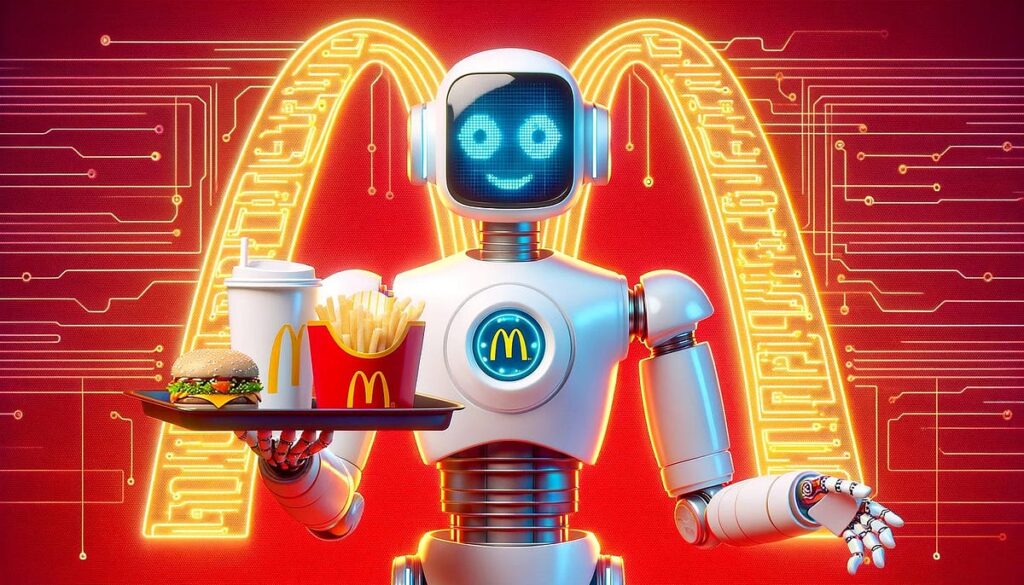

McDonald’s pulled its AI‑generated Christmas spot in the Netherlands within days of launch, sparking a firestorm that has become a textbook example of how quickly the EU’s nascent AI rules can bite. The 30‑second video – billed as “The Worst Time of the Year” – vanished from YouTube and social feeds after a wave of criticism over creepy imagery, copyright theft and the complete lack of any AI disclosure.
The campaign went live in early December 2023, when the Dutch arm of the fast‑food giant released the ad on its official channels. Within hours, users flagged the uncanny characters and background scenes as “off‑brand” and “deep‑fake‑like”. By mid‑December the spot was quietly withdrawn, and the agency behind it, TBWA Amsterdam, issued a brief statement that the commercial had been removed “due to public feedback”.
The production chain reads like a showcase of today’s generative‑AI stack. Copywriters fed a ChatGPT‑4‑written script into Runway Gen‑2, which rendered the snow‑filled cityscape and animated diners. Midjourney supplied high‑resolution stills of the Big Mac, fries and a novelty “Mc‑Snowflake” burger, while DALL‑E 3 was tasked with photorealistic storefront windows that were later tweaked in Photoshop. The final voice‑over, recorded by a professional actor, sat on top of AI‑crafted visuals, yet nowhere was the use of these tools disclosed.
Legal scholars quickly identified a litany of breaches. The background compositions mirror existing stock photographs, raising clear copyright concerns under Dutch law and the EU Copyright Directive. The ad’s failure to label itself as AI‑generated violates the EU’s upcoming transparency obligations for high‑risk AI systems in advertising. Moreover, the crowd scenes reproduced stereotypical facial features, exposing the brand to discrimination claims under the AI Act’s fairness provisions. Perhaps most damning, the agency admitted there was no dedicated compliance officer reviewing the final cut – a direct contravention of the human‑in‑the‑loop requirement for high‑risk AI.
Under the EU AI Act, which entered provisional application in early 2024 and will be fully enforceable in 2026, AI used for “advertising and marketing” is classified as high‑risk (Annex III). This classification triggers mandatory labelling, documented risk assessments, data‑governance logs and a qualified human review before deployment. The McDonald’s spot missed every one of these checkpoints, leaving the brand exposed to fines of up to €30 million or 6 % of global turnover.
Experts warn that the episode is a wake‑up call for multinational advertisers. Legal commentators cited by The Conversation argue that the Act is deliberately harsh on deceptive marketing, while watchdogs such as Dig.watch note that compliance pressure will only intensify as the EU tightens its high‑risk provisions. “The technology is ready, but the governance is not,” one AI ethicist told the press, echoing a broader industry sentiment that the regulatory sandpit is catching up faster than many firms anticipated.
The fallout will reverberate across Europe. Brands seeking the creative edge of generative AI must now embed robust governance frameworks, secure licences for any training data and, crucially, make the AI origin of their content unmistakably visible to consumers. As national regulators coordinate under the EU AI Act, the McDonald’s debacle serves as a cautionary tale: experiment without compliance is no longer an option, but a costly liability.
Image Source: medium.com